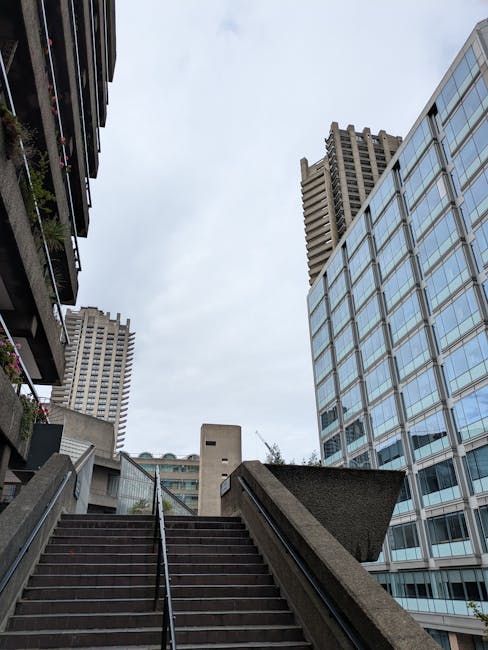
Lauderdale Tower removals advice for Barbican flats
Moving out of Lauderdale Tower, or into one of the neighbouring Barbican flats, is not quite the same as a standard London flat move. The building layout, lift access, narrow routes, and the general rhythm of the estate all change what "good planning" looks like. If you are looking for Lauderdale Tower removals advice for Barbican flats, this guide gives you the practical, real-world detail you actually need: how to prepare, what can go wrong, how to protect your belongings, and how to make the day feel a lot less chaotic.
Truth be told, most move stress in the Barbican comes from the small things. A sofa that looked fine in the living room suddenly becomes a turning circle problem. A fragile lamp is fine until it meets a staircase corner. And if you have ever tried to move boxes while worrying about lift timings, you will know the feeling. So let's make this simpler, calmer, and more workable.
For a broader look at service options while you plan, you may also find flat removals, man and van, and packing and boxes useful alongside the advice below.
Table of Contents
- Why Lauderdale Tower removals advice for Barbican flats Matters
- How Lauderdale Tower removals advice for Barbican flats Works
- Key Benefits and Practical Advantages
- Who This Is For and When It Makes Sense
- Step-by-Step Guidance
- Expert Tips for Better Results
- Common Mistakes to Avoid
- Tools, Resources and Recommendations
- Law, Compliance, Standards, or Best Practice
- Options, Methods, or Comparison Table
- Case Study or Real-World Example
- Practical Checklist
- Conclusion
- Frequently Asked Questions
Why Lauderdale Tower removals advice for Barbican flats Matters
Lauderdale Tower sits within a part of London where access is often more controlled, more vertical, and more sensitive to timing than people expect. That matters because removals are not just about carrying items from A to B. They are about protecting the building, respecting neighbours, managing shared spaces, and moving in a way that fits the estate rather than fights it.
In Barbican flats, the usual "we'll just park outside and shift everything" approach can fall apart quickly. Deliveries and removals may need tighter coordination. Corridors can be long. Lifts can be busy. Internal routes can create bottlenecks. And if you have ever stood with a wardrobe in a hallway that seems to have shrunk overnight, you already know how quickly confidence can drain away. A little site-specific advice avoids that.
This is also why a removals team familiar with tower blocks and estate moves can be worth more than a generic low quote. The best result is usually the one that looks boring on the day: smooth access, no damage, no awkward delays, no last-minute panic. Boring is good here. Very good.
If you are comparing providers, it helps to look at the wider picture too, not just the vehicle size. Pages like removal services, removal companies, and insurance and safety can help you judge whether a team feels organised, insured, and prepared for residential moves in complex buildings.
How Lauderdale Tower removals advice for Barbican flats Works
The process usually starts long before the van arrives. A good move in Lauderdale Tower is built on planning, measurements, access checks, and sensible packing. The idea is simple: reduce uncertainty before move day, so the actual loading and unloading can happen without a lot of improvisation.
Here is how it typically works in practice:
- Assess access: check lift availability, entry points, parking options, and any building rules that affect removals.
- Measure key items: sofas, bed frames, wardrobes, desks, and anything awkward-shaped.
- Pack by room and priority: keep daily essentials separate, and label boxes clearly.
- Protect communal areas: use coverings and careful handling for walls, floors, corners, and lift interiors.
- Load in the right sequence: larger furniture first, fragile items secured, boxes stacked properly.
- Recheck destination access: if you are moving between Barbican flats, the arrival point matters just as much as the departure point.
One thing people often forget: a tower move is not always about distance. A move from one Barbican flat to another a few streets away can still take more planning than a larger suburban move because the buildings themselves create the complexity. The lift is the lift. The corridor is the corridor. No amount of optimism changes that.
That is why services such as removals and removal van options are often chosen for this kind of move: they can be scaled to the flat, the access conditions, and the number of items, rather than forcing a one-size-fits-all approach.
Key Benefits and Practical Advantages
The real benefit of good Lauderdale Tower removals advice for Barbican flats is not just convenience. It is control. And in a building environment where small mistakes can multiply, control saves time, money, and stress.
- Less risk of damage: careful planning reduces knocks to furniture, lifts, walls, and personal belongings.
- Faster move day: when boxes are labelled and access is arranged, the team can work without constant interruptions.
- Better use of labour: fewer trips, fewer surprises, and less lifting back and forth.
- More predictable costs: when the scope is clear, quotes tend to be more realistic.
- Less neighbour disruption: efficient moves are simply quieter and more considerate.
There is also a mental benefit that is easy to underestimate. When you know the piano is protected, the books are boxed properly, and the route has been checked, you stop carrying the move in your head every waking minute. That's worth something. Probably more than people admit.
For people with smaller loads, a flexible option like man with a van or man with van can be a practical fit. For larger households, a more structured moving truck setup may be a better match. The key is choosing for the building, not just for the postcode.
Who This Is For and When It Makes Sense
This advice is for anyone moving within or out of Lauderdale Tower or another Barbican flat who wants to avoid the classic tower-block headaches. That includes long-term residents, new tenants, owners downsizing, people moving in with a partner, and anyone who has bought or rented a flat in the estate and suddenly realised the logistics are more nuanced than the floor plan suggested.
It is especially relevant if:
- you have bulky furniture that needs careful manoeuvring;
- you live on a higher floor;
- you are moving in or out on a tight schedule;
- you need packing help as well as transport;
- you are worried about protecting common areas;
- you need storage between move dates;
- you have items such as art, instruments, or delicate electronics.
It also makes sense if you are coordinating a broader life change. Maybe you are moving from a larger Barbican flat into something more manageable. Maybe you are relocating for work and need home moves support without the drama. Or maybe you are moving a small office setup and need commercial moves or office removals advice because your "flat move" has quietly become a hybrid of home and work gear. Happens all the time.
Step-by-Step Guidance
Here is a practical sequence that works well for Barbican tower moves. Nothing fancy. Just the stuff that prevents headaches.
- Start with a building-specific audit. Check lift sizes, floor access, loading points, and any rules about move timings or protective coverings.
- Measure large items properly. Don't just measure the sofa. Measure the sofa with feet, angles, and any removable parts. Same for beds, cabinets, and tall lamps.
- Sort what is coming, going, and staying. It sounds obvious, but last-minute decisions create chaos. Keep a separate pile for disposal, donation, or storage.
- Book packing support if needed. If you are short on time, professional packing and unpacking services can save a lot of faff.
- Prepare fragile items in layers. Wrap, cushion, box, label. Then label again if needed. A little overkill now is cheaper than replacing a broken frame later.
- Confirm parking and arrival details. Even when everything else is perfect, a parking issue can upset the whole rhythm of the day.
- Protect floors and edges. Good movers will think about this, but it helps when the resident knows what matters most in the flat.
- Keep essentials separate. Documents, chargers, medication, toiletries, a change of clothes, kettle stuff. The first-night box is a lifesaver, honestly.
- Walk the flat after loading. Check cupboards, airing spaces, balconies, and behind doors. People leave passports and remotes in the strangest places.
If you need temporary holding space between dates, storage can be a sensible bridge. And if the move needs to happen quickly, same day removals may be relevant, but only if access and packing are already under control.
Expert Tips for Better Results
These are the little details that make a Barbican move feel easier. Not revolutionary. Just very useful.
- Book the move around the building, not just your diary. If the lift is likely to be busy at certain times, avoid that window if you can.
- Use consistent box labelling. Put room name on two sides and mark anything fragile clearly. It saves time when boxes are stacked.
- Break down furniture early. If a bed frame can be disassembled the day before, do it. Don't leave it for the moving team if you can help it.
- Keep screws and fittings in one bag per item. Tape the bag to the furniture or keep it in a clearly marked pouch.
- Think about weather. London rain has a way of appearing just when you need it least. Wipeable coverings and dry pathways help.
- Tell movers about awkward items upfront. A piano, large mirror, or heavy modular sofa needs planning. Surprises on the day slow everything down.
A small but important tip: take photos of any existing marks or fragile fixings before the move. Not because you expect trouble, but because it helps everyone stay clear about what was there already. That sort of calm detail goes a long way.
For specialist loads, the right service matters. A piano removals booking is very different from standard box-and-furniture transport, and if you are clearing out bulky pieces, furniture removals or even furniture pick up can be useful depending on whether you are moving items, disposing of them, or doing both.
Common Mistakes to Avoid
Most moving mistakes are perfectly avoidable. The frustrating part is that people usually know better - they just run out of time.
- Underestimating access constraints. A van that is too large or a team that has not checked the route can create delays immediately.
- Packing too late. Last-night packing is rarely tidy packing. It becomes "where did I put the charger?" packing.
- Ignoring building rules. If you skip this, you may end up with avoidable conflict or a wasted time slot.
- Not measuring furniture. You can't eyeball a tight doorway and hope for the best forever. Eventually the sofa wins.
- Mixing essentials with general boxes. This leads to a rough first night and unnecessary rummaging.
- Choosing on price alone. The cheapest quote can be expensive if it leads to damage, delays, or poor communication.
One of the most common mistakes in tower moves is assuming a single lift trip will solve everything. It usually won't. And if it does, brilliant - but plan as though it won't. That is safer, calmer, and a lot more realistic.
Tools, Resources and Recommendations
You do not need a warehouse of kit to move well, but a few basic tools make a real difference.
- Strong boxes: use a mix of small and medium boxes; oversized boxes are tempting, but they get too heavy.
- Packing tape and tape gun: faster, cleaner, and less annoying than wrestling with a loose roll.
- Bubble wrap or paper wrap: for glass, artwork, lamps, and delicate surfaces.
- Furniture blankets and covers: ideal for protecting wood, corners, and upholstered items.
- Markers and labels: clear handwriting, ideally bold enough to read at a glance.
- Furniture tools: screwdrivers, Allen keys, and small bags for fittings.
If you want to keep the move efficient from start to finish, a combination of removal services, packing and boxes, and a suitable vehicle from removal van options is often the simplest route. The goal is not to do everything yourself. The goal is to reduce friction wherever possible.
Also worth considering: if your move involves professional or shared equipment, office relocation services may be the better fit than a basic domestic move. Barbican flats often blur the line between home, studio, and work space, so use the service that matches the reality of what you are moving.
Law, Compliance, Standards, or Best Practice
For moves in Lauderdale Tower and other Barbican flats, the main compliance concerns are usually practical rather than legal drama. You are generally looking at building management rules, safe manual handling, insurance cover, parking considerations, and reasonable care for shared property.
Best practice in the UK removals trade normally includes:
- appropriate insurance: so you know where responsibility sits if something is damaged;
- safe manual handling: lifting correctly, using the right equipment, and avoiding unnecessary strain;
- care for communal areas: protecting floors, walls, and lift interiors where possible;
- clear communication: especially around access, timings, and fragile items;
- transparent terms: so both sides understand what is included before the day arrives.
If you are comparing providers, it is sensible to look at their published health and safety policy, insurance and safety information, and terms and conditions. Those pages tell you a lot about how the company thinks. More than most people realise, actually.
For payment confidence and general customer care, their payment and security, privacy policy, and complaints procedure can also be useful reference points. Not glamorous reading, no. But sensible reading.
Options, Methods, or Comparison Table
Different Barbican moves call for different approaches. Here is a simple comparison to help you choose.
| Option | Best for | Strengths | Watch-outs |
|---|---|---|---|
| Man and van | Small to medium flat moves, a few bulky items | Flexible, often efficient, good for simpler loads | May be less suitable for large households or lots of furniture |
| Full removals service | Larger flats, complete household moves, complex access | More structured, more hands, better for heavier workloads | Usually more costly than a basic van-only booking |
| Packing plus removals | Busy households, fragile items, time-poor movers | Reduces stress, improves packing quality, saves time | Needs early booking and clear instructions |
| Storage plus removals | Gap between move-out and move-in dates | Useful for staged moves and temporary overspill | Requires extra coordination and planning |
In practice, the best choice depends on item volume, access, timing, and how much help you want. If you are moving with a lot of furniture, the lift is small, and the flat still looks half full by 9pm, then a more complete service is probably worth it. No shame in that.
Case Study or Real-World Example
A typical Lauderdale Tower move might look something like this. A resident in a two-bedroom Barbican flat is moving to another London property and has a mix of books, a dining table, a bed frame, a couple of chests, and a surprisingly heavy armchair that everyone keeps calling "the reading chair" because, well, it has that look.
They start by measuring the larger items and realising the wardrobe will need to be dismantled. They also separate essentials into a single overnight box, label fragile items more clearly, and arrange for storage of a few pieces that will not fit in the new place immediately. On the day, the move is calmer because the route has already been thought through. The movers know what is coming, the boxes are ready, and there are fewer decisions left to make under pressure.
The difference is not magic. It is preparation. A decent removals plan turns a potentially stressful tower move into a managed sequence of small jobs. That is the whole trick, really.
If the move involves a business setup or part-home office, the resident may also benefit from looking at office removals support or, for bulk item clearing, furniture removals. It depends on the load, not the label on the front door.
Practical Checklist
Use this checklist a few days before move day. It keeps the moving brain from spinning in circles.
- Confirm lift and access arrangements.
- Check any building move rules or timing restrictions.
- Measure all large furniture and awkward items.
- Decide what is going, staying, going into storage, or being donated.
- Pack a clearly labelled essentials box.
- Protect fragile items with proper wrapping.
- Disassemble furniture where sensible.
- Keep fittings and screws in labelled bags.
- Set aside keys, documents, chargers, and medication.
- Tell your removals team about any access issues in advance.
- Take photos of fragile items or existing marks if needed.
- Plan for parking and arrival timing.
If you need extra help packing, moving, or storing items, it is often easier to combine services than to juggle everything yourself. A move with less scrambling is usually a better move, full stop.
Get a free quote today and see how much you can save.
Conclusion
Lauderdale Tower removals advice for Barbican flats comes down to one simple idea: respect the building and plan for the realities of tower living. Measure carefully, pack properly, check access, and choose a removals setup that fits the flat rather than fighting it. Do that, and the move becomes much more manageable.
Whether you are shifting a few key items, relocating an entire household, or bridging a gap with storage, the best outcomes come from calm preparation and clear communication. That is especially true in Barbican flats, where the details really do matter.
And once the last box is in, there is a quiet little relief that hits different. You know the one. The kettle goes on, the room sounds empty for a moment, and the hard part is behind you. That feeling is worth planning for.
Frequently Asked Questions
What makes Lauderdale Tower removals different from a standard flat move?
Lauderdale Tower removals usually involve more planning around access, lifts, shared areas, and timing than a typical ground-floor or suburban flat move. The building layout matters a lot.
Do I need to measure furniture before moving from a Barbican flat?
Yes. Measuring large items before the move helps you avoid problems with doorways, lifts, corners, and stair turns. It is one of the simplest ways to prevent delays.
Is a man and van service enough for a Lauderdale Tower move?
Sometimes, yes. If you have a smaller load or only a few bulky items, a flexible man and van service can work well. For larger moves, you may need more support.
Should I use storage if I am moving within the Barbican?
Storage can be helpful if your dates do not line up or if you are reducing the amount of furniture in the new flat. It is especially useful when the new layout is tighter than expected.
What should I pack separately on moving day?
Keep essentials like documents, medication, chargers, toiletries, keys, and a change of clothes separate. A first-night box is a very good idea.
How far in advance should I book removals for Barbican flats?
As early as possible. Tower moves often need more coordination than standard moves, so leaving it late can limit your options and make timing harder to manage.
Can movers help with packing as well as transport?
Yes, many move plans work better when packing support is included. If time is tight or items are fragile, packing and unpacking services can be a smart choice.
What if I have a piano or other heavy specialist item?
Specialist items need specialist handling. A piano, for example, is not just another piece of furniture. It is better to use a service such as piano removals if you need that kind of move.
How do I reduce damage to communal areas?
Use protective coverings where appropriate, move carefully, communicate clearly, and avoid overcrowding lifts or corridors. Good planning and gentle handling do most of the work.
Is same-day moving realistic for Lauderdale Tower flats?
It can be, but only if access is straightforward, packing is already done, and the load is manageable. For more complex moves, same-day arrangements can feel rushed.
What documents or details should I confirm before the move?
Confirm access instructions, timings, parking or loading arrangements, insurance details, and the scope of work. If anything feels unclear, ask before the day rather than during it.
Where can I check a company's policies before booking?
Look at pages such as about us, insurance and safety, and terms and conditions to get a better sense of how they work and what standards they follow.